Posts Tagged BIM
Vectorworks 2011 Launches : So? : BIM
Posted by Jim Foster in BIM on September 20, 2010
 Vectorworks 2011 launches and its got more sauce, its new and improved, they include the undercoating, and put a turbocharger under the hood and I am not sure this article in CADalyst is much more than a PR release, however, one thing that sticks is not the 450,000 seats worldwide but the fact that Jon Peddie reports them having 75% of the Mac based CAD market now that could be interesting. Whether they can leverage that position or their expertise in developing on the MAC platform remains to be seen. For example, have they got it running on the iPad so it goes into the field or do you leave that up to some 3rd party. All you read and see about BIM, it’s should be about interoperability yet all these tools profess to have better wall tools, or site modeling which is all well in good as we want to see those tools get better but what I want to see is we kick integrations ass.


More firms entering the PointCloud from Photo Biz: Areoscan to launch shortly
Posted by Jim Foster in 3D, Built Environment, New Technologies on September 7, 2010
While Autodesk labs has already made Photofly available for free over the web another competitor has thrown their hat into the PointCloud from Photos ring, Areoscan , and I have to say they are playing a game of catch up with Autodesk, who I believe already has a pretty good reseller network and did I mention Photofly is currently free. Add to this battle that Autodesk most will likely have the functionality built into the next AutoCAD release and its a big hill they are starting to climb. So I can’t say if there will anything new or compelling in order to pay for the service, unless they are going to fly you to their HQ in New Zealand for a personal demo. And don’t get me wrong I am always rooting for new companies but right now cannot see how the services between Photofly and Areoscan differ, except Photofly is free and Areoscan is more difficult to pronounce.
Vela Systems Raises Series B Round : $6 Million from Autodesk and other investors : BIM
Posted by Jim Foster in BIM on September 3, 2010
“We now have the time and opportunity do things differently” that quote keeps coming back to, uttered by a GC we did work for, and now we see it’s not just HP and Dell battling over cloud computing but corporations active in the BIM space as well. Press Release Below.
Vela Systems Raises $6M Series B for Expansion, Strategic Partnerships
Autodesk Leads Round; Commonwealth Capital Ventures and GrandBanks Capital Provide Continued Support
Burlington, Mass. – September 2, 2010 – – Vela Systems, Inc., a provider of mobile field software for the architecture, engineering and construction (AEC) industry, today announced it has closed a $6 million Series B round of equity financing led by new investor Autodesk, Inc. (NASDAQ: ADSK). Series A investors Commonwealth Capital Ventures, GrandBanks Capital and individuals also participated in the round. Details of the transaction were not disclosed.
Coming off of a record-breaking first half of 2010, this latest round of funding positions Vela to expand and address rapidly-growing customer demand. Vela will use a portion of the investment to help support and expand the Autodesk partnership especially as it relates to bringing Building Information Models (BIM) to the point-of-construction.
“A year ago we announced our collaboration with Vela Systems to integrate Vela Systems’ construction field management software with Autodesk Navisworks Manage,” said Jim Lynch, vice president, BIM Product Group, Autodesk AEC Solutions. “Today’s investment announcement marks the next significant step in our growing relationship aimed at helping general contractors, construction managers and design-build firms streamline the BIM process from design through construction and into handover.”
Sustainable Retrofits Projected to be $400b US Market by 2030
Posted by Jim Foster in Built Environment, Green, New Technologies, Sustainable Retrofits on August 27, 2010
 I had a conversation yesterday with as Program Manager from Autodesk who was looking into implementing workflows utilizing Autodesk Products to produce energy analysis for existing buildings. He had seen one of our many fantastic videos for PKNail, okay we have two homegrown videos, but our effort in capturing the built environment dovetails nicely with this effort. And while I have commented many times on the sustainable retrofit market I had not seen a number placed on it but Autodesk posted a number on their web site. If you are not intending to make the jump you can read some of their conclusions below.
Buildings are key to achieving climate stabilization, representing roughly 40% of global energy consumption and 25% of global carbon emissions. In addition, energy efficiency retrofits represent a massive latent market, projected to reach an estimated worth of $400 billion by 2030 in the U.S. alone. To respond to these twin environmental and market demands at scale and speed, the building industry needs to respond quickly and cost-effectively.
Our research suggests that rapid energy modeling enables building energy assessments with a smaller budget and shorter time frame, and can thereby help increase the number of existing buildings that undergo assessment and energy upgrades. We expect property owners and managers, home buyers, tenants and landlords, designers and architects, auditors, and energy consultants to benefit from such a workflow.
Included in this effort is Revit CEA (Conceptual Energy Analysis) that allows the user, after putting parameters in place, to use a cloud computing enironment, that is send it out for computation, to perform the calculations using Green Building Studio as the back end but making it transparent to the user. What I like about this effort is that I am not required to fire up or even know Green Building Studio to do the energy analysis, the export and data exchange, done in gbXML is done seemlessly and I get the report.
But back to the original premise which is getting existing buildings into a format that you can perform this and Autodesk has developed a workflow to help, and while this is excellent I would also argue for PKNail’s place in the workflow as measuring and building in the environment you are going to model and analyze reduces a couple of steps and amount of software you need to know. I don’t argue it should be the only tool just that it deserves a place on the shelf.
Disney BIM : 2D, 3D, 4D, 5D, 6D, More. Jack Blitch from Disney presents BIM at NASA Info Tech Summit
Posted by Jim Foster in BIM, New Technologies on August 20, 2010
Jack Blitch, VP Disney Imagineering, presented at Day 2 of the NASA Information Technology Summit on August 17 and discussed BIM and IPD. His comments really start at 1:06 mark and move forward from there. What I find interesting and really reiterates the process of BIM, call it IPD, call it smart, but bringing in the sub-contractors early to reduce rework and make sure the designers are creating anything that can’t be built or is too expensive. I brought in some of the transcript below.
We bring in subcontractors early to help with design instead of our designers designing something maybe we can’t afford or doesn’t make sense. We have the guys that are building it sitting at the design table with us…we want to reduce rework, use it as a constructability tool…determine clashes early so we don’t (find) them out on sight. Reduce personnel. Reduce shop drawings… So the shop drawings come right out of the model so the vendors/sub contractors don’t have to redesign. – Jack Blitch, NASA Summit
In case the video is not coming up you can go directly to http://tiny.cc/nasabimdisney , as either the CSPAN embed, or WordPress is not dealing well.
Stitch Kingdom also covered the summit and summarized Blitch’s comments and I’ve included some of them here.
Using the Fantasyland Expansion as the primary example, Blitch demonstrates how Building Information Modeling (BIM) and Integrated Project Delivery (IPD) users computers to generate ‘6-D models’ to engineer a project before the construction beings, a concept pioneered by Disney in an effort to reduce costs and speed construction by avoiding potential problems on-site. Disney began using BIM-IPD on Soarin’ and — as an example — Blitch stated that had Expedition Everest been engineered using traditional methods, it would consist of approximately 20,000 construction documents.
Using The Little Mermaid: Ariel’s Undersea Adventure as an example of the BIM-IPD process, Blitch demonstrates how 3D modeling has evolved into 4D modeling in which the computerized model can actually project the construction over time which the Imagineers then use as a guideline for the attraction’s construction. Blitch adds a 5th and 6th dimension to the project development which covers cost as well as the capability of exporting various components of an attraction’s construction to its respective contractor/partner.
We’re Going Inside : Buildings and BIM
Posted by Jim Foster in 3D, Built Environment, New Technologies on August 20, 2010
New technologies have developed around the capture capture of existing buildings in a digital environment. Laser Scanning comes first to mind, and now Photofly from Autodesk, however, these seem to best address the exterior of the buildings and are used in particular circumstances that warrant them. Now comes the backpack scanner, and thanks to Erik Lewis and his blog Who’s Afraid of the Big Bad BIM for bringing it to my attention and I’ll quote him here:
“Incredible. Between PKNail and emergent technology like this, I see a real future in gathering existing facilities information into BIM databases…”
Laser Backpack Creates Instant 3D Models
Very cool.
BIM CAD Throwdown : Dassault Takes Aim with Catia Live Building and Draftsight
Posted by Jim Foster in 3D, BIM, cloud, New Technologies, Open Standard, SaaS on July 30, 2010
Holy frontal assault Batman. Dassault, the french producer of CATIA (Computer Aided Three-dimensional Interactive Application) / Solidworks is making a strong move into the world of architecture. CATIA, generally used in the aerospace and engineering fields, has also been used successfully by Gehry to produce his curvilinear buildings. They are now introducing 2 products aimed squarely at the Autodesk Bullseye, a CAD application developed through the IntelliCAD Consortium (ITC) and the Open Drawing Alliance (ODA) called Draftsight and its going to be free, yup free. And is available here.
And while it is available for the Windows Family of OS (XP / Vista / Seven) MAC and Linux versions are in the pipeline, take that into account that IBM, you’ve heard of them, markets these solutions worldwide and that complaints about Revit not handling larger products are scattered across user groups and BIM forums one can believe there is an opening. Additionally, if they are following the SaaS path of putting Draftsight in the cloud for file sharing/integrity it becomes a pretty powerful argument to think about switching, especially if all the ingrained keystroke commands and shortcuts from AutoCAD are copied along with it. Having seen the Intellicad interface, I think that most likely a yes.
Excellent article at AEC Magazine that covers the introduction in depth, and thanks to @amonle / John Allsopp twitter for bringing this to my attention. I’ve included a portion below.
Based on a future version of Catia and its data management system Enovia, Dassault Systèmes is developing a competitive parametric modelling solution to compete with Autodesk’s Revit BIM (Building Information Modelling) tool. I understand that the next update of Catia will store its data in the cloud and Catia will potentially be downloaded and licensed from the desktop. This will enable Dassault Systèmes to overcome the fact that it does not have a value-added reseller channel to sell Catia Live Building but needs to compete with an established and low-cost player.
The brief demonstration showed an architectural model being rapidly developed and edited using Catia. Bernard Charlès said that the new product could do modelling in seconds, what Revit would take 45 minutes to do. And Dassault Systèmes should know — it was among the many original investors in the start-up company that developed the first version of Revit.
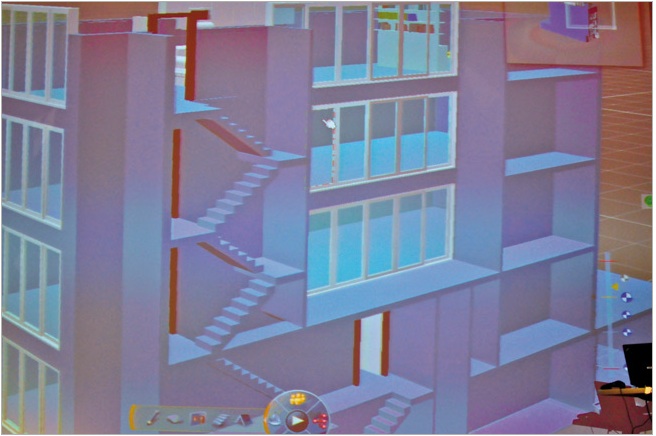 While Revit has captured the mindshare here in the US and Down Under among other places no one can discount the Dassault / IBM alliance and their entrance into the AEC industry in a big way. The amount of consulting opportunities and hardware sales should have IBM salivating. So if Draftsight is free, what is Live Building coming in at?
A Better Blueprint in Maine : #bim
Posted by Jim Foster in Adoption, BIM on July 29, 2010
 Reported in Maine Biz by Robert Cook, and brought to my attention by John Stebbins (@johnstebbins), this article shows the full black bear hug Maine contractors are putting on BIM.
Denis St. Pierre knew sooner or later E.S. Boulos Co. would need to add Building Information Modeling technology to its skill set if it, the largest electrical contractor in northern New England, wanted to remain competitive on large-scale projects.
The nudge came sooner, says St. Pierre, the company’s director of estimating and project management, when in June the Westbrook contractor won a bid linked to the $75 million terminal expansion at Portland International Jetport. The project’s lead contractor, Turner Construction of Boston, requires all companies involved in the jetport project to use BIM, a 3-D hardware and software tool that allows multiple contractors to see the location and status of all project components.
John O’Dea, CEO of the Associated General Contractors of Maine in Augusta, says BIM technology is not new, but it is just starting to find its way into some of the state’s smaller and mid-sized construction firms, usually as the need presents itself.
“It’s heavily dependent on the market and the size of the project,” he says.
Many small construction firms still rely on AutoCAD drawings and more traditional planning tools for smaller-scale projects, says O’Dea, but they would be wise to adopt the BIM technology — the 21st century version of a blueprint — because demand is increasing.
“The genie’s never going back into the bottle,” says O’Dea, whose organization represents 250 members.
Recently we’re seeing reports from Maine to Malaysia on BIM adoption…fire up the bandwagon.
Department of Energy (DOE) Launches New Blog : Energy Blog : Yawn? : BIM
Posted by Jim Foster in BIM, Energy Analysis on July 27, 2010
 As reported by Katherine Tweed from GreenTech Media and picked up by Wired the DOE Launched a new blog. (Man, this new media everybody ‘borrowing’ and ‘sharing’ content gets tough to footnote). Alone, generally, this should be met with a collective YAWN. However, as a thread of the whole fabric it adds strength to the perception and reality of the move to a sustainable future and the real investment that is happening around it. And get this from a post on July 23.
…Cindy Regnier (from the) Lawrence Berkeley National Laboratory… works on several projects, including two that are Recovery Act-funded: the new User Facility for Low-Energy Integrated Building Systems test bed and the Commercial Building Partnerships initiative)…is helping to select dozens of new and existing commercial building projects from around the country to receive technical assistance from the national labs to achieve 50% energy savings in new construction and 30% in existing buildings. Each building will have energy-savings measures validated and evaluated from energy and cost standpoints, all with the goal of developing and promoting energy efficiency measures that can be easily deployed throughout the industry.
So not completely dull, and if you keep an eye on this project you might find out where the government might focus more efforts for existing buildings, techniques, tools, products, etc. For example, I wonder what technologies and assistance Ms. Weigner might be deploying herself. Cindy give me a shout.
The blog itself is available here
BIM Malaysia is on Board : BIM Adoption increasing
Posted by Jim Foster in Adoption, BIM on July 26, 2010
 Like the GSA, the State of Wisconsin, the State of Texas, now the country of Malaysia is on the board according to to this recent article in the Malay Mail.
Public Works Department (PWD) director-general Datuk Seri Dr Judin Abdul Karim said the department, in supporting the government’s desire to maximise the value of investment throughout the development plans, would utilise and enforced various ICT solutions in its strategies. This includes to spearhead the adoption and usage at all levels of Building Information Modeling (BIM) software and applications in building design.
The theme of this brief article seemed to be get on board or get left behind. “Geez Jim would you get off this BIM bandwagon,” I hear some of you saying, although I doubt you’re reading this if you are not right behind me playing the tuba, “you’re worse than the ice cream truck at little league games.” However I call them like a I see them, and I do understand the legacy tail of 2D and traditional CAD is long and will be with us for a very long time, not only that, I believe there will be a large market for hybrid technologies and also ones making CAD better but no one ever argued the development of the jet engine and its almost complete adoption in the aviation industry, except for maybe those companies just making propellers.


