Posts Tagged Autodesk
Google X : Project Genie : Vannevar Technology -> Wants to Change AEC, Change the World
Posted by Jim Foster in BIM, New Technologies on November 4, 2013
 There seems to be little known about what’s going on at this century’s Xerox PARC, Google X and it’s Project Genie, but a small amount of information was unveiled at ArchDaily. Google’s commitment to sustainability is apparently going to reach into the AEC industry and possibly trample into Autodesk’s campsite. While other software firms are hampered by their own internal growth and sales and what they can commit to marketing, (Autodesk wins there) and R & D. The folks at google, know no such bounds. The spinoff Vannevar Technology (which sounds suspiciously close to Vandelay Industries,) is working on creating…..who knows. Their website states “Reimagining building design for a more sustainable future.” Which is about as exciting as the 5th slide in a time share deck. However, google has the clout and cash in what can be a very stubborn, hesitant to change,” what are you talking to me ” culture. Typically the principals in architecture firms don’t care about technology, they have minions to get it done so why invest in software or new tech when my current pricing, business structure, ROI formulas are working and set in stone, plus I don’t like business that much I like designing building so the less I get involved the better. Engineers will analyze and without comparable metrics to analyze, then…paralyze. Construction managers will embrace tech if it saves the time, which equals money, so time and money but they have to live with the consequences, so embracing new tech….tough crowd. Which is far from saying that things can’t be done better.
The small bit of copy on the web site rightly touts that buildings, yes buildings produce the most greenhouse gases, 40%, so what is google going to do about it? Systems, software, construction methods, materials, vertically integrate and go borg on the industry. My guess is whatever they do, they will be building some buildings with Vannevar Tech for proof of concept and case studies. My guess it’s got be some integrated design and FM system to produce tangible CO2 / greenhouse gas savings, plus energy savings. Some have guessed it might be a SketchUp on steroids, but then why did they sell it to Trimble. And who cares about the design process, what part of that is the current lifecycle of a building, very little, I’d want to own the building for most its life, it’s operating life, and want to own the management of it, and the data. There ya go, so then, IBM and Maixmo, meet google, you might know them. These are the crazy kids floating balloons for internet access. 


California Legislates Mandatory Energy Bench Marking : Deal With It
Posted by Jim Foster in Built Environment, Energy Analysis on July 16, 2012
 Yoinks, so much for market capitalism. California with AB 1103 ( Commercial Building Energy Use Disclosure Program
Rulemaking) legislated mandatory energy benchmarking into existence for non-residential buildings. Energy bench marking is to be done using
U.S. Environmental Protection Agency’s (“EPA”) ENERGY STAR® Portfolio Manager benchmarking system.
A building owner shall comply with this article according to the following schedule:
(a) On or after January 1, 2013, for a building with total floor area measuring more than
50,000 square feet.
(b) On or after July 1, 2013, for a building with a total floor area measuring more than 10,000
square feet and up to 50,000 square feet.
(c) On or after January 1, 2014, for a building with a total floor area measuring at least 5,000
square feet and up to 10,000 square feet.
What impact does this have on LEED EB? If any? Is anyone using LEED EB? I was talking to an owner; raises funds, buys buildings, etc. and the general consensus of any green, LEED, sustainable, initiative, at least for him, was does it add value to his portfolio in the short term as they have a much shorter window of ownership. However, with this mandate and benchmarking we might have something completely quantifiable to reflect the price of a building from an operational point of view. And it’s an Energy Star rating like the one you find on your new refrigerator. While there might be plenty of flaws, as the benchmarking seems pretty rudimentary, it is a first step. So the government mandated it and while that seems a dirty word these days, mandate; it’s here, deal with it. I deal with the market as it exists and until I can afford to have a phalanx of lobbyists to create a market that way I want it, I deal with what’s in front of me. And right now, it’s mandatory Energy Auditing.
How will the software makers respond, if at all, to this? How about, can I have push button energy star rating on my building please? Brief search turns up Melon Power, which coordinates electricity usage and your submission to Energy Star Portfolio Builder. I have not tested it but yes, we want an app for that! Not buried in the subscription pack of Green Building Studio. Fact is, could be a wonderful Lead Generation Tool. Fact is, all these companies Autodesk in particular buy these companies and stuff them into their AEC package, so although the price might stay the same, you are getting more ‘value’ per install because of everything else that’s stuffed into it. But software usage, cost per seat, software as a service? That’s a rant for another day.
For now, there’s a new law of the land in California, and if it’s like the weather, it starts on the west side, and moves east.
Autodesk Continues to Round Out Portfolio : Acquires Vela Systems
Posted by Jim Foster in BIM, New Technologies on June 8, 2012
 Announced today, Autodesk Acquires Vela Systems. If you are developing products within the Building Life Cycle somewhere between and including design to demolition, you are in play. Trimble has been going on an acquisition rampage with its acquisition of Tekla and Sketch Up and Autodesk never one to be a wallflower has just acquired Vela. This is almost 2 years to the date that Vela was unveiled publicly. No idea of their market size but their own press releases state that they are more than ‘twice as big’ as any competitive Field BIM Systems. Regardless, market penetration means little at this point now that the Autodesk marketing/sales system is behind it. How big was Revit in 2006 when they were purchased. A primer of Vela’s Key Features below. Congrats Vela folks, job well done.
Vela Field Management Suite Key Features
The Vela Field Management Suite of Web, Mobile and Reports enables everyone throughout the enterprise to access documents, field activities and reports in the office and in the field. Since its release a year ago, and to further broaden the usability throughout the enterprise, Vela Systems has expanded upon the following features:
- Field BIM® for commissioning and handover that ties BIM to the field for data and document exchange
- Company-level checklist and issue template capabilities to implement and enforce quality and safety programs
- Increased accessibility via the Internet on multiple devices like iPads and Smart Phones
- Better web-based reporting that turns field data into powerful information for managing quality, safety and risk at the project and company level
3D Model with photos from your iPad
Posted by Jim Foster in 3D, BIM, New Technologies on May 9, 2012
 Autodesk announced the release of 123D Catch for the iPad. I have not yet tried the iPad version, but assume it’s mostly the same since before you chose the photographs to be sent to the cloud, and now it is sending photos you are taking from the iPad. One of the criticisms I had with it before is that you had to follow a very particular way of taking photos, which apparently I was not very good at because all my results came back looking like a kaleidoscope. However, everybody is looking for an iPad app/strategy these days and this helps. And if you get good at framing the pictures, using this on site to get basic 3D geometry, most likely for massing purposes or some initial energy analysis, well that’s very cool.
Holy Frijoles: Trimble acquires SketchUp : Game on to own Digital Buildings
Posted by Jim Foster in BIM, Built Environment, New Technologies on May 2, 2012
 As they say on Sport Center, Trimble is en fuego, they acquired Tekla earlier with a well documented, well established player, especially in the structural space who also released their own BIM product with BIMsight, and now they are acquiring Sketch Up. While all the SketchUp users are asking, ‘who the hell is Trimble?’ The Trimble folks, or AEC folks understand. Looks to me that Trimble is vertically integrating and surrounding the ‘digital’ building. Someone said to me somewhere along the line that “Leica is an engineering organization that has to sell stuff. Trimble is a sales organization that happens to sell surveying equipment” Anyway you get the gist. Makes one wonder what Autodesk will counter with now that Trimble has crashed the party. Seems like Google has decided to give up the building data market and concentrate in collecting every piece of information that exists about individuals instead. That’s too bad because it would have been interesting to see the Google Machine start to digest all that building data. However, the fact alone that they had 30 million activations in the past year has to give anyone in this space pause, then again it’s free, but free works for market penetration. And honestly isn’t the end game to get a project into your ecosphere and manage it from design to demolition, from cradle to grave and Trimble is starting to put together a pretty compelling environment. Let’s take a look shall we:
Accubid – Cost Estimating Project Management Software : CAD based or screen take offs (acquired by Trimble August 2010)
HHK – GIS and CAD Surveying Solutions For Germany and Europe. (acquired by Trimble January 2008)
Meridian – Capital Projects and Major Renovation Management Software (acquired by Trimble October 2006)
Plancal -HVAC , Building equipment and Appliance Software (acquired by Trimble January 2012)
QuickPen – Provides Pipe and HVAC Estimating Software Solutions, CAD Detailing Solutions for HVAC and Mechanical Systems (acquired by Trimble March 2009)
Tekla – Building Information Modeling (BIM) Solutions (acquired by Trimble
Trimble Business Center – Allows you to edit, process, and adjust data from all Trimble surveying instruments from your desktop
Trimble Connected Community– Web based project management, let’s just call it the “Cloud” based management, at least they should.
So what’s all this Vertical Integration mean? Well Rockefeller or Carnegie would argue it creates efficiencies in the market place, offering you a better product for less money. However, I am more curious to how Autodesk responds. They could argue that Trimble is not a threat because they “Autodesk” are a 3D company, not just focused on AEC. It reminds me of quote from Bob Rosenberg, former CEO of Dunkin Donuts when asked about Krispy Kreme’s rise. This was at a time when Krispy Kreme was hot and expanding everywhere. CEO Rosenberg responded, “we don’t see them as a competitor.” To which you might say, are you kidding me, “DONUTS”, but he followed with “we’re a coffee company they’re a bakery.” And you know what, he was right, but we’re talking about the ownership of buildings in the digital domain, that’s big.
So we see a hardware company, Trimble, acquiring a lot of software. Would Autodesk start to acquire hardware. Although back in the day one of their product managers told me, “we don’t do hardware.” I expect to see more acquistions down the road. FARO, a publicly traded company at about $1 billion could be interesting. Where are the gaps in the portfolio? What’s next?
PKNail : Hand Held Laser Direct to Revit Building Surveying Software Let’s you Fly.
Posted by Jim Foster in As Builts, BIM, Built Environment, Laser BIM, New Technologies on November 16, 2011

Flying Squirrel at Yosemite
November 16, 2011 – Boston, MA
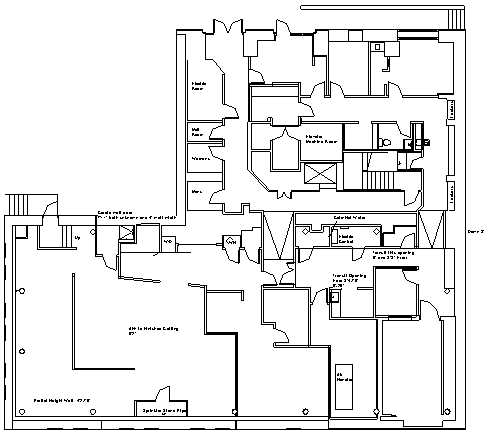
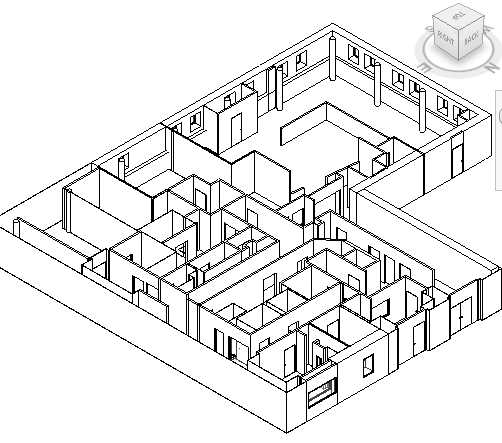
7,000 Square Feet of Mixed Medical Office Space, Single Floor, 4 Hours. All Surveyed in Revit. All Revit Objects. In 3D. All Doors and Windows sized in 3 Dimensions. Exterior and Interior Fit Outs. Considering the shell had to be done. other floors would go faster, 20,000 SF a day per person not uncommon, Office Space within the same shell, even faster. Build, Document in Real Time using a hand held laser, driving Revit through the laser key pad as long as your laptop is close by no need to stop. Measure, build, boom…done.
PKNail was designed by field professionals for anyone who has ever had to document a building, to put a tool in your bag that helps you be successful in what you do. Do things quicker, do them better, produce for your clients, produce for yourself.
PointKnown will be at Autodesk University in Las Vegas to launch PKNail for Revit, compatible with both Revit 2011 and Revit 2012 and then at EcoBuild in Washington DC the week after.
You can catch Jess Miller’s session at AU where she will present her own findings for PKNail for Reality Capture.
http://au.autodesk.com/?nd=event_class&session_id=9855&jid=1742242
And why the flying squirrel? Well, look at him. He’s sitting on the precipice and he’s going to jump, and when he does he’s going to fly.
Shaking the Cage : Trimble to Distribute Teklas’s BIM Sight
Posted by Jim Foster in Adoption, BIM on February 16, 2011
 So on the heels of Tekla’s announcement that BIMSight will be free to use for BIM coordination, clash detection and the like, the next Press Release is that Trimble will be a ‘preferred’ distributor, what preferred connotates is anyone’s guess, however, the business model of Trimble corporate carrying Tekla software is different. Now I know plenty of hardware resellers carry Leica and then are a VAR for Autodesk because they see the crossover but that’s not at the corporate level. Corporate level commitment, that’s different. Now I have heard people from Autodesk state, ‘we don’t do hardware’ meaning that their play is not to merge the worlds, however, Trimble and Tekla, different matter. Trying to rattle the Autodesk hegemony, not sure, but one thing is sure and it’s that this BIM thing is a big tent, from design to energy modeling, to CFD (Computational Fluid Dynamics) etc. and that going BIM to Field is going to get bigger. In fact, you can get Tekla’s software on Trimble’s Web site, BIMtoField.com –
“a Trimble Website dedicated to helping building owners, contractors, and engineers better understand the potential of solutions that allow the transfer of Building Information Modeling (BIM) data to field level systems for increased productivity and cost savings.”
A lot of people streaming into the Big BIM tent.
Free BIM : Tekla Announces BIM Sight : It’s all about the data
Posted by Jim Foster in Adoption, BIM on February 14, 2011
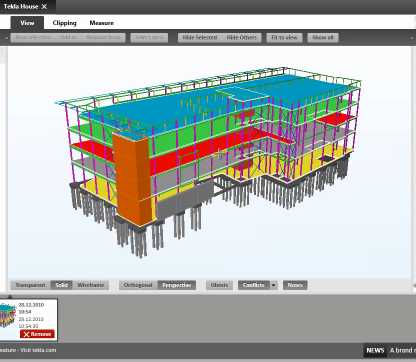 Interesting news that Tekla announces a new product for BIM communication, BIMsight, how this differs from Navisworks? well it’s free, and if you’ve seen people line up for free stuff at conventions, carnivals, playgrounds, sporting events, etc. you have to understand that ‘free’ gets people excited, but free is not necessarily good. I don’t doubt that Tekla put together an excellent product but the true value of the product comes from the people using it, trained on it, understanding and leveraging it, however, dropping the initial price hurdle to well, zero can’t hurt. It seems that it works like Navisworks in that BIM information is brought in for clash detection and project communication, I also wonder how the data is dealt with and stored; since I believe who ever has the data wins. That is, your in the Autodesk camp using their products, storing info in the cloud through them, barriers to exit start rising, you start using BIMsight to communicate with your clients/subs/etc. your then living in Tekla’s world. None of this necessarily a bad thing as standardization brings a lot of good and a lot of productivity gains, ask anyone who develops products for Windows.
However, begs the question, what’s the business model? As we used to see firms with their core product and developing/purchasing products to surround/extend their offering, and normally charge for it. In this case, give it away for free. Does this bring more people to Tekla Structure? Is there something else at work? Why do I ask these questions? Probably too much coffee or detective novels when I was kid. Maltese Falcon by the way, great book and great movie.
When I say BIM what do you think? The US Army Corp of Engineers thinks Revit
Posted by Jim Foster in Adoption, Autodesk, BIM, Revit on December 2, 2010
While I am no shill, I just pasted this straight from the wire. Info you can use? Maybe/Maybe not, but if your trying get on schedule with the US Government for projects, I’d say knowing Revit is better than not knowing it, and here’s another data point why.
USACE Selects Autodesk Software Solutions for Mission Critical Applications
LAS VEGAS, Nov 29, 2010 (BUSINESS WIRE) — Autodesk University:
Autodesk, Inc. /quotes/comstock/15*!adsk/quotes/nls/adsk (ADSK 36.53, +1.24, +3.51%) , a world leader in 3D design, engineering and entertainment software, today announced that the U.S. Army Corps of Engineers (USACE), has signed a multi-flex, enterprise license agreement for Autodesk products and Autodesk-related services and training. The contract value of the deal is $6 million over a three year period and includes access to the following Autodesk products: the Autodesk Revit family of products; AutoCAD Civil 3D software; and Autodesk Navisworks software products, among others.
“We are extremely pleased to further strengthen our long-standing relationship with the USACE with this agreement,” said Bill Goodson, vice president, North American public sector and utility sales, at Autodesk. “Autodesk software plays a vital role in helping USACE provide quality and responsive engineering services to over 37,000 employees in 90 countries worldwide. This agreement ensures USACE will have full access to the latest innovative Building Information Modeling (BIM) software tools and professional services to support its national defense mission. The flexible and concurrent licensing Autodesk is offering the USACE will provide better asset management and version control.”
Autodesk Software Products: Mission Critical Solutions for USACE
As BIM-based designs are required by the General Services Administration (GSA), the USACE now requires a BIM-based design approach for all vertical military construction (MILCON) projects in fiscal year 2010 and beyond. With today’s announcement, the USACE will now have complete access to Autodesk’s BIM family of products, including Autodesk Revit Architecture software and Navisworks software products. By having access to the BIM products, USACE personnel — who deal with managing building construction, operations and maintenance — will have the software tools and training necessary to take better advantage of the 3D building models being delivered by design contractors.
Exchange BIM : Bid and Win : Autodesk giving it away : Adword model coming to BIM?
Posted by Jim Foster in Adoption, BIM, Marketing on December 1, 2010
 Okay so this might be premature but read today under Autodesk Broadens its Reach in the Wall Street Journal about how Autodesk is creating and marketing consumer products, where it currently holds no cache. Mention Autodesk to people outside of the AEC industry and they look at you much like a dog who’s heard a high pitch whistle. Autodesk created Sketchbook for the ipad and iphone. They also released Homestyler, which is free. The most expensive version of Sketchbook goes for $7.99. Now if you are not selling stuff to make money, how else can you do it? Let’s look at the popular models – you are a lead generation tool, allow advertising or create a marketplace and you take the vig on the transaction. If I am one, if not the biggest purveyor of 2D CAD and 3D Modeling Software I have an opportunity, an opportunity to hook into software that was not available when it was just 2D lines, but 3D objects, let’s think about it. One of the D’s, ‘Cost’, how is that driven through the system, well, mostly by quantity take offs, and creating a liquid marketplace that allows the quantity take offs, or actual fabrication to be bid on creates transparency/liquidity. Allowing for brand name components to be swapped into a building model, making it more of a building information model, allows it to be spec’d during the design phase, what’s that worth as a vendor? Even Microsoft is getting in on this with their release of Microsoft Hohm, energy data based on location, tax, records, etc. When looking at specific retrofits there is a frame with ‘local professionals.’ Cannot be long until they are offering branded insulation, (owens corning) , and Energy Star appliances.
The building model becomes the grocery store and there are slotting fees, fees to put your product on the end cap, fees to put it on a particular shelf, etc. So fees, hmmn, to have a certain level of prominence in the marketplace, sound familiar? Google’s Adwords. Understand that the supermarkets were there first and are most excellent at retail, and the companies involved in selling through supermarkets, are also most excellent in, well, marketing, think P&G. Homestyler, allows you to choose between “20,000+ generic and branded items”, cue branded items, and right from the web site:
Autodesk Homestyler automatically compiles a list of the products in your new home design, including information such as brand name, model, color, and more. It tallies approximate quantities for counter-tops, flooring, baseboards, and paint, so you’ll know exactly the amount of materials to buy. Simply print your list and bring it with you when you head out to shop.
Dupont (counter-tops), Sherwin Williams (Paint), Dacor (Appliances) , FLOR (Carpeting) are already prominently featured.
 Now this seems awfully like the tip of the spear, before Autodesk partners with a major shopping site, Sears? / Amazon? for fulfillment and to get appliances etc. into your house. And if you were Sears what would you pay to be the partner or get slotted to be top dog in this universe. Autodesk has stated that they want to get over 50 million customers in 2 years, if you are essentially giving away the software, what’s the point? Well, guess what, besides having a kid, the #1 reason for you to go on a spending binge is buying a new house, or conversely redesigning your existing one and for the marketing savvy folks being first in is a big deal as they can shape and form your opinions. Start thinking of the Autodesk Seek Website as the market or Google’s 3D Warehouse.
While we can argue the big brotherly approach of all this, in truth, if you have gone to the trouble of designing your own kitchen, this integration of design/shop/fulfillment can be a blessing instead of plugging in a generic cook top, wondering if the dimensions are right, wondering what the warranty info is, you could have right there, good right? Scary that the whole world knows you own 6 Burner Jenn Air Cook Top? Well you can decide for yourself. But this type of integration is coming and with it, standard marketing practices that have been around for a long time, tracking purchases? who do you think was there first with loyalty cards, most likely your local grocery store, and don’t think they did not turn around and sell that information. Just know it exists and enjoy the abundance of free software that’s around that can make your life easier, also know that someone somewhere is paying for it.


